
Newport News Storm Damage
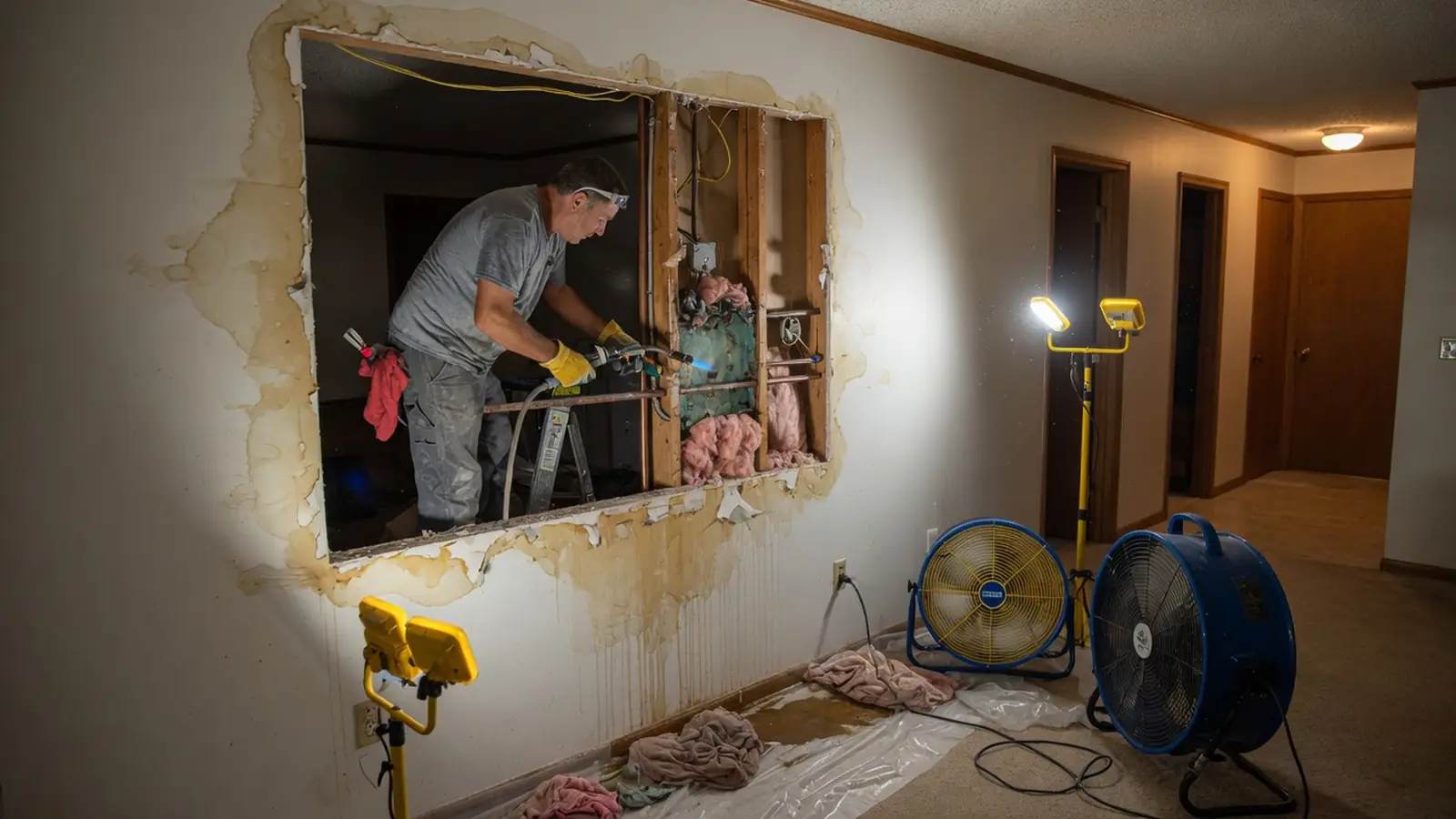
Seasonal nor'easters along the Virginia Peninsula push wind-driven rain under roof soffits and through siding seams, causing hidden moisture intrusion inside exterior wall cavities. Our rapid-response technicians arrive promptly with thermal imaging and extraction systems to protect structural integrity. We stabilize framing, dry enclosed wall cavities, and restore peace of mind.
Close the shutoff, then call (757) 555-0179.
Proven Waterfront Storm Mitigation
Low-lying waterfront blocks in Hilton Village, Huntington, and near shipyard docks face chronic water intrusion from tides and rain.
Tidal surges along the Warwick River push water past foundations into Hilton Village crawl spaces, preventing natural drying.
A pattern echoed in public discussions is how low-lying sites with dense clay soil retain moisture like a sponge, turning interior plumbing failures into severe structural threats.
When severe storms compromise a residential structure, relying on dedicated water damage restoration professionals ensures moisture is extracted before framing rots.
Our technicians deploy commercial desiccant dehumidifiers and high-capacity extractors to stabilize indoor relative humidity rapidly.
We monitor moisture levels daily with calibrated non-penetrating meters, documenting dry-down curves until every structural member reaches industry baseline.
Step-by-Step Storm Recovery Protocol
Coastal floodwaters driven by tropical storms and nor'easters are classified as Category 3 black water, requiring porous drywall and insulation removal rather than in-place drying. We follow a strict protocol to isolate contaminated zones, protect indoor air quality, and systematically decontaminate framing.
- Emergency Extraction And Pumping. As public forum discussions frequently highlight, homeowners experience severe flooding when primary sump pumps fail during heavy rains, requiring urgent water extraction and framing drying. Our crew deploys high-volume submersible pumps and truck-mounted extractors to remove bulk water instantly.
- Controlled Removal And Cavity Inspection. Following storm water intrusion, homeowners question whether saturated drywall must be removed immediately or if professional drying equipment can salvage it. Our specialists test wall assemblies with deep-probe moisture meters to establish clean flood-cut lines and safely extract wet insulation.
- Structural Dehumidification And Antimicrobial Treatment. We position commercial desiccant dehumidifiers and high-velocity air movers to pull moisture out of structural joists and studs. If standing moisture lingers, investing in comprehensive mold remediation stops fungal spores from colonizing wall cavities.
- Moisture Verification And Final Sign-Off. Every project concludes with comprehensive thermal imaging and electronic moisture logging to confirm dry standards across all structural assemblies. We provide complete documentation for insurance claims before removing our drying equipment.
Our Iron-Clad Restoration Standard
Homeowners often describe how rainwater penetration leads to sagging and stained ceiling drywall, leaving homeowners uncertain about safely draining trapped water and drying cavities. Our technicians use thermal cameras and moisture meters to track hidden migration pathways without destructive demolition whenever possible. When storms compromise subfloors, mitigating standing crawl space water prevents foundation settling and wood rot. We stand by our work until structural framing reaches industry-standard equilibrium moisture content.
Emergency Sump Pump Extraction
When severe downpours cause primary sump pumps to fail, we rapidly pump out standing water and extract moisture from subfloors. Our technicians dry exposed framing rapidly to eliminate moisture before structural decay takes root.
Ceiling And Roof Leak Mitigation
Wind-driven rains penetrating attic soffits or roof decking cause ceiling drywall to sag and stain. We safely drain trapped overhead water, inspect hidden joist cavities, and set up targeted dehumidification to salvage building materials.
Category 3 Floodwater Cleanup
Tidal flooding and coastal storm surges introduce hazardous black water containing heavy microbial loads into lower levels. We perform precise flood cuts on contaminated drywall, dispose of soaked insulation, and sanitize framing with EPA-registered antimicrobial solutions.
Dedicated Coastal Storm Recovery Standards
Our mitigation approach centers on rapid moisture containment, technical accuracy, and adherence to industry drying benchmarks. Every storm recovery project receives methodical psychrometric monitoring to ensure structures return to safe baseline levels.
- 10Zip Codes Served
- 4Service Areas
- 3Services Offered
Local homeowners rely on our rapid storm response when harsh weather causes sudden interior flooding. Here is what property owners have to say about working alongside our dedicated restoration crews.
“Another restoration outfit left half-dried baseboards and trapped water inside our exterior wall insulation after a nor'easter hit. The crew came in, stripped out the compromised materials that the previous workers missed, and set up proper dehumidifiers until the framing was bone dry. They turned a botched mitigation into a completely clean and certified recovery.”
Marcus B.
“When flash flooding inundated our crawl space, they gave us a clear written line-item estimate before starting any work. The final invoice matched that initial quote down to the exact dollar with zero unexpected add-ons or hidden fees. Dealing with transparent pricing during an emergency was an enormous relief for our family.”
Evelyn T.
“Every afternoon before packing up their trucks, the crew swept the hallways, vacuumed up stray debris, and neatly organized their air movers so we could still navigate our home safely. Even with heavy demolition happening on wet drywall, our living areas remained remarkably clean throughout the week. You rarely see this level of courtesy from trade contractors.”
Derek S.
“I received photo logs and moisture readings via text twice a day without ever needing to track anyone down. The team kept me fully informed on drywall drying progress while I was stuck at work managing storm repairs. Their clear daily check-ins gave me absolute confidence that our home was in expert hands.”
Chloe M.
Frequently Asked Questions
Does storm water saturated drywall have to be removed immediately?
Contaminated storm water requires immediate removal of wet drywall and insulation because porous materials harbor Category 3 black water toxins. Following storm water intrusion, homeowners question whether saturated drywall must be removed immediately or if professional drying equipment can salvage it. When clean rainwater enters from above, drying in place may work if addressed within 24 hours, but flood surge water always requires flood cuts.
How do you address sagging ceilings after heavy rain penetration?
Sagging ceiling drywall must be punctured carefully to drain trapped water safely before industrial dehumidifiers dry the hidden framing cavities. Rainwater penetration leads to sagging and stained ceiling drywall, leaving homeowners uncertain about safely draining trapped water and drying cavities. Placing buckets beneath a controlled drainage hole prevents catastrophic plaster collapse while crews inspect overhead joists.
What should be done when a primary sump pump fails during a storm?
Failed sump pumps require immediate emergency water extraction, backup pump installation, and continuous structural drying to protect foundation framing. Homeowners experience severe flooding when primary sump pumps fail during heavy rains, requiring urgent water extraction and framing drying. Submersible extraction units remove rising water before low-lying crawl space soil becomes fully saturated.
Why does dense coastal clay soil worsen storm water foundation damage?
Dense regional clay soil holds storm moisture like a sponge, creating sustained hydrostatic pressure that forces groundwater directly into crawl spaces. Low-lying sites with dense clay soil retain moisture like a sponge, turning interior plumbing failures into severe structural threats. Mechanical dehumidification and specialized vapor management are essential to counteract this prolonged soil saturation.
How quickly does storm water mitigation need to begin to prevent mold?
Professional drying must start within 24 to 48 hours following storm intrusion to halt microbial growth and prevent permanent structural decay. Warwick River tidal surges and wind-driven rains introduce substantial organic contaminants. Immediate extraction paired with EPA-registered antimicrobial washdowns ensures structural wood studs dry safely without fungal colonization.