
Newport News Mold Remediation
Sustained summer relative humidity above 60 percent in coastal Virginia accelerates mold germination on wet structural framing within 24 to 48 hours of an unmitigated leak. A frequent pattern echoed in trade video discussions highlights that mold begins colonizing damp building materials within 48 hours, making extraction and humidity reduction critical within the first two days. Our certified specialists deploy commercial dehumidification and safe containment to preserve your home.
Phone (757) 555-0179 to have us look.
Dedicated Moisture Control
The median owner-occupied home locally was built in 1979, meaning aging plumbing and crawl spaces often harbor concealed moisture issues.
With 81,681 housing units on record across our service area, moisture challenges vary widely from older coastal foundations to newer subdivisions.
About 17% of housing units locally (14,105 of 81,681) were built since 2000, so a substantial share of the local stock is still on its original systems.
When unexpected plumbing failures threaten structural materials, relying on comprehensive water damage restoration eliminates trapped moisture before active colonization takes over.
Our technicians isolate active fungal growth with physical barriers and calibrated suction equipment to safeguard your indoor air.
How We Safely Clear Mold
A common pattern in public forum discussions is that homeowners receiving high remediation quotes struggle to verify whether full containment, negative air scrubbing, and material tear-out are strictly necessary. We demystify the entire scope by documenting exact moisture levels and spore counts before proposing physical removal.
- Rapid Inspection And Moisture Profiling. Public industry discussions emphasize that mobilizing professional extraction within 60 minutes prevents floor warping and stops mold spores from taking hold. We assess hidden dampness across baseboards, subflooring, and wall cavities using non-invasive thermal imaging and moisture meters.
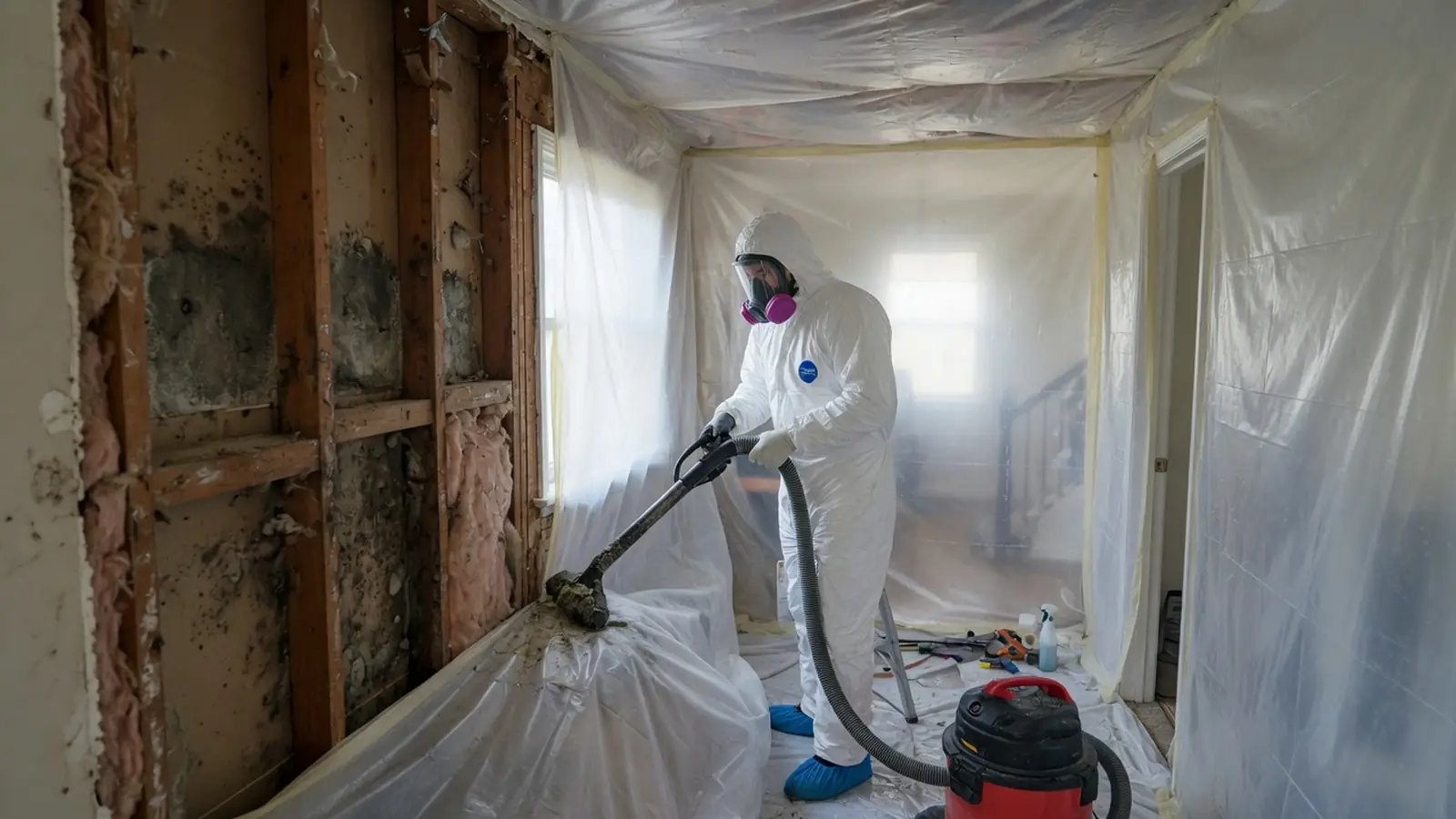
- Containment And Negative Air. Remediation crews erect plastic containment barriers under negative air pressure with HEPA filtration to keep disturbed fungal spores from migrating into clean living areas.
- Source Removal And HEPA Vacuuming. Chemical fogging alone is insufficient for mold remediation without physical HEPA vacuuming and antimicrobial wiping of contaminated substrates, which is why our technicians physically abrade colonies and sanitize framing directly.
- Crawl Space And Subfloor Clearance. Homebuyers finding crawl space mold during property inspections encounter conflicting contractor evaluations regarding ventilation, condensation, or exterior foundation leaks. When ground seepage threatens floor joists, resolving persistent crawl space water problems eliminates hidden condensation and standing puddles.
Our Remediation Commitment
Our standard of care relies on scientific verification rather than guesswork or aggressive sales tactics. Following storm water intrusion, homeowners question whether saturated drywall must be removed immediately or if professional drying equipment can salvage it, and our team conducts calibrated depth readings to provide clear answers. If you are facing severe storms, find out more about our storm damage mitigation services that determine what porous drywall must be safely extracted versus structural framing that can be sanitized and restored under controlled airflow.
Structural Antimicrobial Treatment
We physically treat porous and semi-porous framing after leaks to stop root hyphae from damaging wood integrity. Surface wiping and botanical applications provide lasting protection against recurring growth.
Negative Air And Spore Scrubbing
Using commercial HEPA filtration units, we continuously scrub indoor air to capture microscopic airborne spores. This prevents cross-contamination across unaffected bedrooms and living areas.
Crawl Space Mold Mitigation
Crawl spaces beneath older properties trap ground moisture and high humidity, leading to heavy floor joist mildew. We clean contaminated joists and balance relative humidity levels.
Our Commitment To Environmental Safety
We provide comprehensive remediation protocols across 6 local service areas, ensuring every affected structure receives certified HEPA filtration and moisture stabilization. Our team adheres strictly to industry standards without cutting corners or recommending unnecessary structural removal.
- 10Zip Codes Served
- 6Service Areas
- 3Services Offered
Read genuine feedback from local property owners who trusted our technicians to safely contain moisture issues, clear fungal contamination, and restore healthy indoor air.
“While removing the drywall behind our bathroom vanity, the crew discovered hidden mold colonies spreading into the subflooring. Instead of panicking or halting progress, they showed me the moisture readings, set up additional negative air scrubbers, and resolved the hidden growth smoothly. Their calm competence made what could have been a nightmare completely manageable.”
Marcus V.
“We had only five days before the closing inspection on our property sale, and an inspection report flagged active crawl space mildew. The team mobilized immediately, established plastic containment barriers, and completed the full remediation with time to spare. The final clearance testing passed easily, allowing our settlement to proceed right on schedule.”
Brenda K.
“A previous handyman simply sprayed bleach across our moldy basement joists and left behind dust and persistent odor. This company came in, thoroughly cleaned up the residue, and set up true HEPA filtration to eliminate every remaining spore colony. The difference in air quality and workmanship was noticeable within hours.”
Darren T.
“Every line item on the estimate was explained before work started, from the physical containment barriers to the antimicrobial treatment. They finished the job on time, provided comprehensive documentation for our records, and charged the exact figure quoted without a single surprise fee. It is rare to find contractors who honor their written estimates so meticulously.”
Elena R.
Frequently Asked Questions
How do I know if full containment and negative air are necessary for mold removal?
Full containment and negative air scrubbing are necessary whenever fungal growth exceeds ten square feet or affects porous structural framing. Homeowners receiving high remediation quotes struggle to verify whether full containment, negative air scrubbing, and material tear-out are strictly necessary. We assess spore dispersion with particle counters so you never pay for unnecessary physical demolition.
Why is chemical fogging alone insufficient for complete mold remediation?
Chemical fogging alone fails because dead fungal spores retain allergenic toxins until physically removed with HEPA vacuums and damp wiping. Why is chemical fogging alone insufficient for mold remediation without physical HEPA vacuuming and antimicrobial wiping of contaminated substrates? Misting chemicals temporarily suppresses odors, but undisturbed dead spores still provoke respiratory reactions unless extracted physically.
How quickly does mold germinate after a leak in our humid coastal climate?
Active mold germination begins on damp structural framing within 24 to 48 hours when indoor relative humidity consistently exceeds 60 percent. Sustained summer relative humidity above 60 percent in coastal Virginia accelerates mold germination on wet structural framing within 24 to 48 hours of an unmitigated leak. Immediate water extraction and dehumidification stop vegetative spore growth before colonies spread.
What causes conflicting evaluations regarding crawl space mold during home sales?
Conflicting evaluations happen when inspectors confuse seasonal crawl space condensation with active foundation leaks or venting deficiencies. Homebuyers finding crawl space mold during property inspections encounter conflicting contractor evaluations regarding ventilation, condensation, or exterior foundation leaks. We measure subfloor moisture content to pinpoint whether moisture stems from soil vapor, duct sweating, or exterior grading.
Does water damaged drywall always have to be removed during mold remediation?
Drywall must be cut out whenever moisture readings remain above eighteen percent or visible spore colonization has penetrated the gypsum core. Following storm water intrusion, homeowners question whether saturated drywall must be removed immediately or if professional drying equipment can salvage it. While solid framing studs can frequently be dried and treated in place, wet porous drywall deteriorates rapidly and should be removed promptly.