
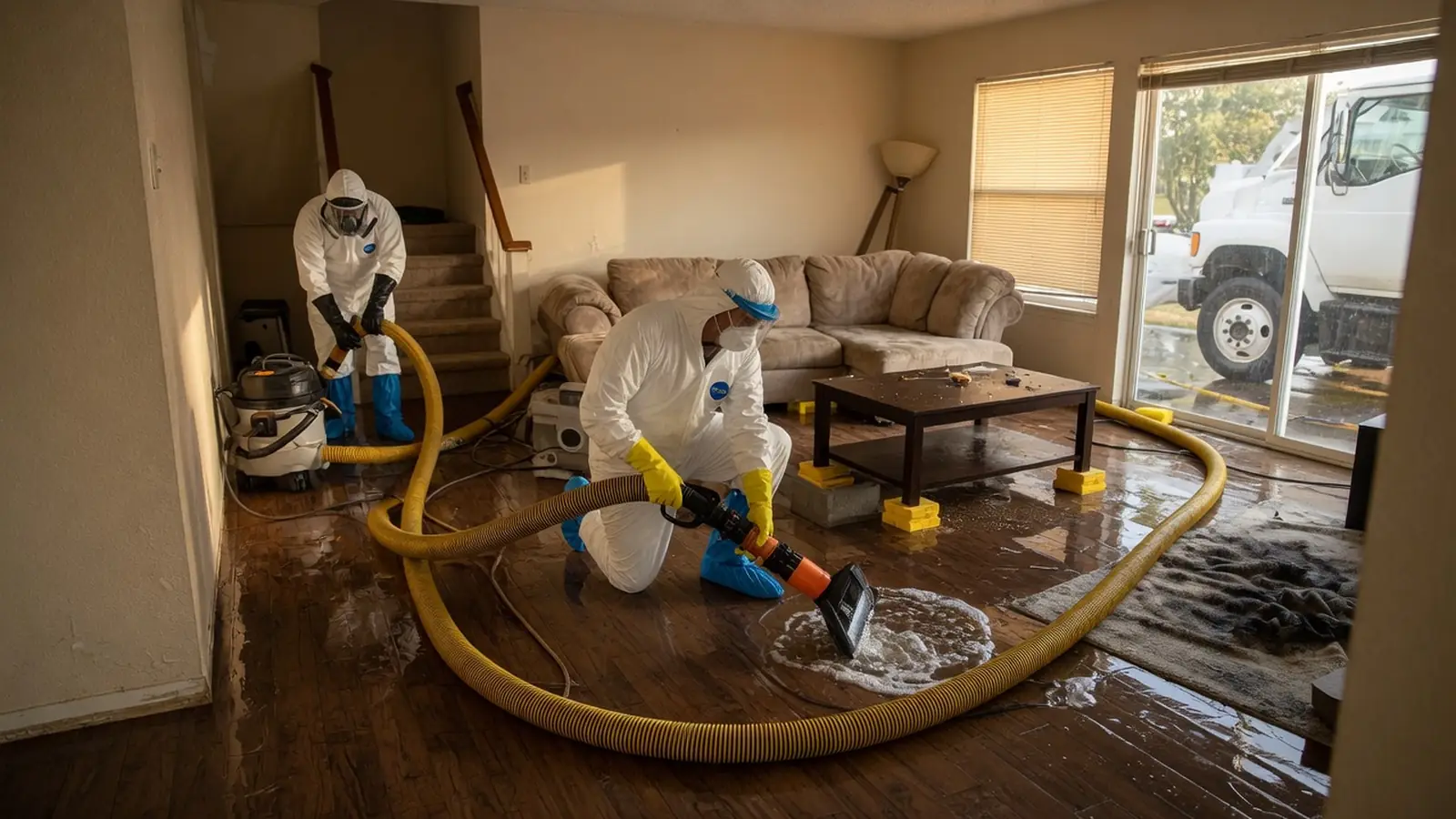
Water Damage Restoration Newport News VA
NOAA radar recorded 740 hail signatures within about 15 miles locally between 2021-2025 (2021: 232, 2022: 282, 2023: 96, 2024: 49, 2025: 81). The heaviest recent hail year around our area was 2022, with 282 radar hail signatures inside a 15-mile radius, leaving compromised roofs vulnerable to sudden interior flooding. Rapid mitigation protects framing before permanent deterioration begins.
Call (757) 555-0179 when you find water where it shouldn't be.
Structural Drying And Moisture Remediation
Our drying specialists bring decades of hands-on structural remediation experience to coastal neighborhoods across the Peninsula.
About 19% of housing units locally (15,493 of 81,681) were built before 1960, the era of galvanized steel supply lines and cast iron drains.
About 15% of housing units across the Peninsula (12,114 of 81,681) were built in the 1960s, overlapping the years aluminium branch wiring was installed.
About 35% of local residential units (28,491 of 81,681) were built in the 1970s and 1980s, overlapping the years polybutylene supply piping was commonly installed.
About 69% of area housing units (56,098 of 81,681) were built before 1980, the period when asbestos-containing materials and lead paint were still in use.
When moisture penetrates below the first floor, resolving standing crawl space water under subflooring prevents rot from spreading into support beams.
A pattern echoed in public discussions is when prospective buyers uncover inches of standing water submerging crawl spaces and seek immediate guidance on water extraction versus drainage installation before closing.
We complete continuous thermal imaging inspections throughout drying to verify moisture leaves every hidden framing pocket.
Rapid Structural Drying Steps
Our rapid response protocol stabilizes structures following flash flooding or severe squalls, providing emergency restoration for severe storm damage before structural elements warp. Mobilizing professional extraction within 60 minutes prevents floor warping and stops mold spores from taking hold. In community forums, homeowners dealing with chronic crawl space moisture and periodic puddling ask how to assess if exterior drainage works or if a sump pump is required to protect foundations.
- Immediate Water Extraction. Technicians deploy high-volume truck-mounted extractors to remove bulk water from floor coverings and low cavities. Homeowners discover standing water pooling under their homes after heavy rainstorms and struggle to diagnose downspout, grading, or groundwater causes, which we pinpoint right away.
- Moisture Mapping And Cavity Inspection. We measure baseboards and framing cavities with non-invasive electronic moisture meters. Standing water wicks vertically into drywall and wood studs, requiring psychrometric climate control rather than surface airflow alone.
- Industrial Psychrometric Dehumidification. Low-grain refrigerant dehumidifiers and directed air movers pull embedded vapor out of structural timbers under precise vapor pressure management.
- Antimicrobial Treatment And Verification. Technicians sanitize surfaces with botanical antimicrobials before signing off on dry standards. If moisture lingered before containment, we coordinate professional mold remediation for affected building materials to ensure indoor air quality remains safe.
Science-Based Structural Recovery
We adhere to strict IICRC S500 restoration standards on every residential and commercial project. Mold begins colonizing damp building materials within 48 hours, making extraction and humidity reduction critical within the first two days. Homeowners often describe how homebuyers finding crawl space mold during property inspections encounter conflicting contractor evaluations regarding ventilation, condensation, or exterior foundation leaks, which is why our certified technicians supply objective moisture logs throughout remediation.
Emergency Water Extraction
High-powered extraction units remove standing water from carpeting, hard surfaces, and low subfloor cavities within minutes of arrival. Rapid water removal arrests vertical wicking into wall framing and prevents permanent wood distortion.
Structural Psychrometric Drying
Industrial refrigerant dehumidifiers and specialized air injectors balance ambient vapor pressure to pull moisture from deep interior studs. Continuous monitoring ensures building assemblies dry evenly without cracking or secondary damage.
Thermal Moisture Inspection
Infrared cameras and penetrating moisture meters locate concealed moisture behind tile, under cabinets, and within wall insulation. Detailed thermal mapping guarantees that no hidden damp pockets are overlooked before reconstruction begins.
Our Commitment To Verified Structural Drying
Restoring moisture-compromised homes requires scientific precision, psychrometric climate tracking, and rapid response across every service corridor.
- 11Zip Codes Served
- 6Service Areas
- 3Services Offered
Local property owners rely on our emergency drying and structural recovery specialists during plumbing emergencies and post-storm recovery. Here is what homeowners share about their restoration experience with our certified crews.
“When our upstairs laundry line ruptured, the lead technician explained why closed-cell foam insulation and composite baseboards would withstand future coastal humidity much better than standard replacement trim. Choosing those resilient materials saved us from costly repeated repairs while keeping the immediate scope within our budget. The crew handled the tear-out cleanly and kept us updated on every moisture reading.”
Marcus B.
“Tropical storm downpours caused severe road flooding that blocked access to our neighborhood on the first morning of drying. Once streets cleared, the crew extended their shift into the late evening and set up backup generators to get the dehumidifiers running without losing valuable time. Their quick schedule adjustments saved our hardwood subfloors from buckling.”
Elena R.
“Our condominium board immediately questioned the noise and power cords running through the shared breezeway during overnight extraction. The crew personally spoke with the HOA manager, installed insulated sound baffles around the machinery, and taped down rubber ramps over all common walkways. That polite professionalism kept our neighbors happy while our living room was dried out.”
Darren K.
“Six months after that pipe burst flooded our finished basement, there is zero musty odor and our baseboards remain completely straight and dry. The team did not just pull out the surface puddles; they tracked deep structural dampness until every wall cavity matched normal baseline levels. Living in the house today feels completely safe and fresh.”
Valerie T.
Frequently Asked Questions
How quickly must emergency roof tarping and window board-up happen after storm wind damage to prevent secondary water and mold loss?
Emergency board-up and roof tarping must happen within 24 hours of storm wind damage to prevent intrusive rainwater from creating severe mold growth. Securing breaches immediately stops rainwater from penetrating attic insulation and drywall assemblies before structural drying equipment arrives.
Does homeowner insurance cover burst pipes and coastal storm flood damage?
Standard homeowners policies cover sudden pipe breaks but exclude storm surge flooding, which requires separate flood coverage under national programs. Insurance adjusters routinely deny damage caused by slow, neglected leaks, only approving sudden and accidental water events.
How many days does structural water damage drying typically take?
Professional structural drying typically requires three to five days under continuous commercial dehumidification and monitored air movement. Dense framing timbers, multi-layered flooring, and insulated cavity walls require steady vapor pressure differentials until certified dry baselines are reached.
How do technicians verify that hidden moisture is completely removed?
Certified technicians verify complete structural dryness using calibrated penetrating pin meters and non-invasive infrared thermal imaging devices. Daily moisture readings compare affected structural materials against dry reference standards taken in unaffected rooms of the property.
What should homeowners do first while waiting for extraction crews to arrive?
Homeowners should immediately shut off the main water valve, turn off circuit breakers to damp rooms, and avoid walking through standing sewage. Taking photos of damaged belongings and elevating furniture legs on foil pads protects contents while preserving documentation for claim adjusters.